
Blog
Tea Space Design: Minimalism & Zen
How Space, Silence, and Intention Shape the Inner Landscape of Tea
Before the kettle warms, before the leaves unfurl, the tea space already determines the spirit of the session. A tea space is not merely a corner of a room or a surface for arranging tools—it is a state of mind made visible. It is the architecture of calm, the choreography of silence, the quiet field in which the ritual of tea can unfold. Minimalism and Zen are not styles imposed upon the tea table; they are ways of seeing, ways of being. They remind us that beauty arises not from abundance, but from clarity; not from decoration, but from presence; not from possession, but from attention.
A well‑designed tea space does not shout. It breathes. It holds emptiness the way a bowl holds water. It allows the senses to soften, the mind to settle, and the heart to open. In such a space, the smallest gesture becomes meaningful—the lifting of a cup, the sound of water, the quiet settling of steam. The tea space becomes a sanctuary, a place where the world slows down enough for us to feel the texture of time. And in this slowing, something essential is revealed: that the art of tea is the art of creating space—space for clarity, space for connection, space for the self to return to itself.
I. The Essence of Minimalism — Creating Space for Presence
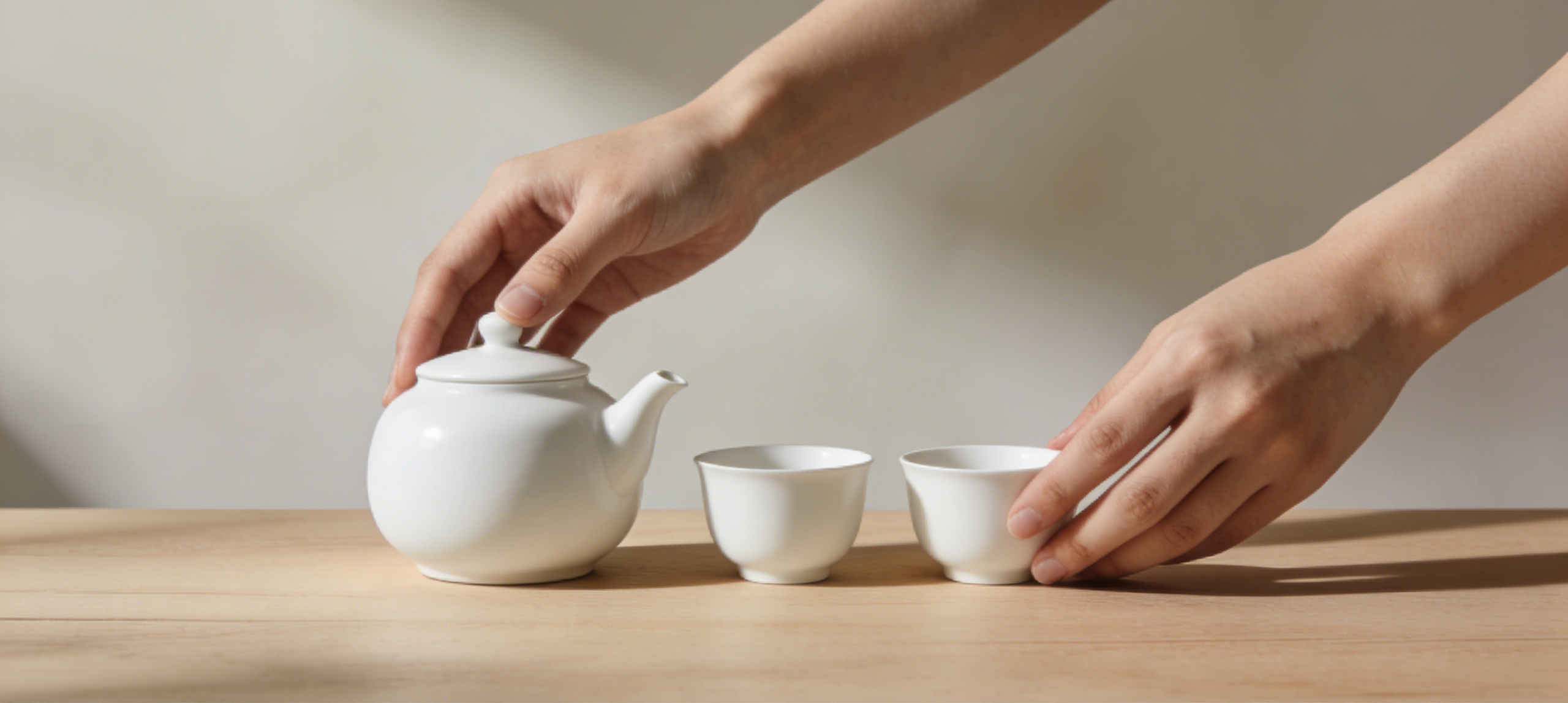
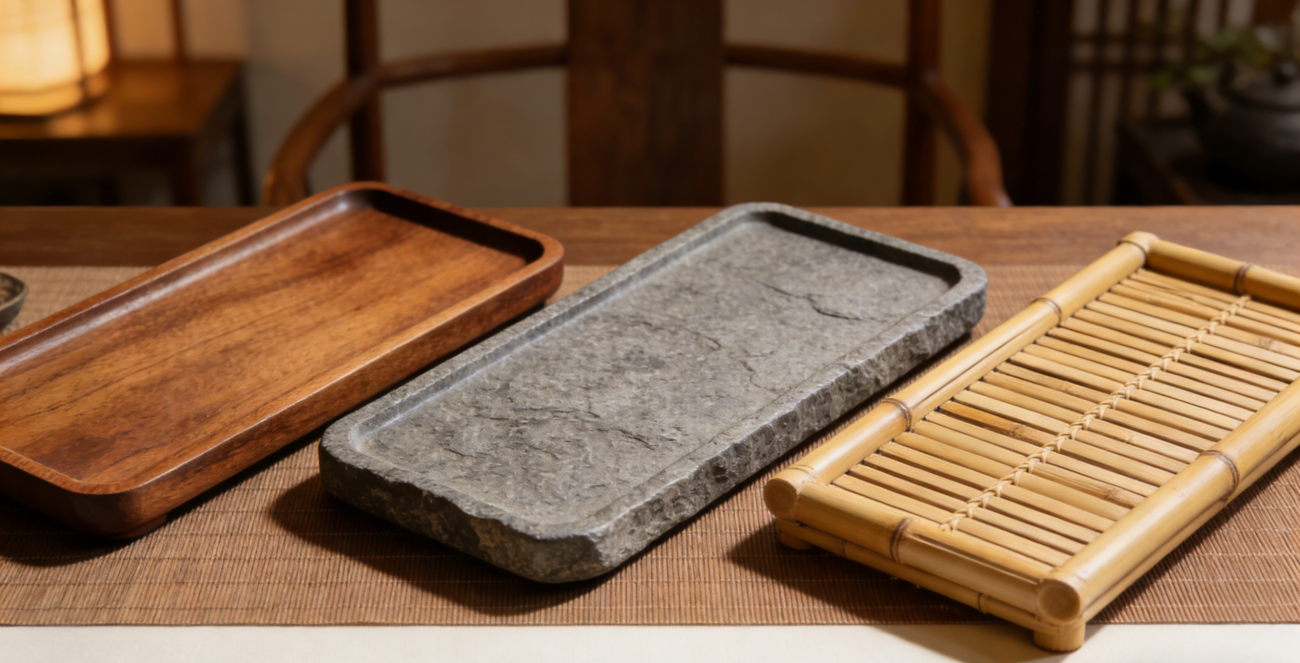
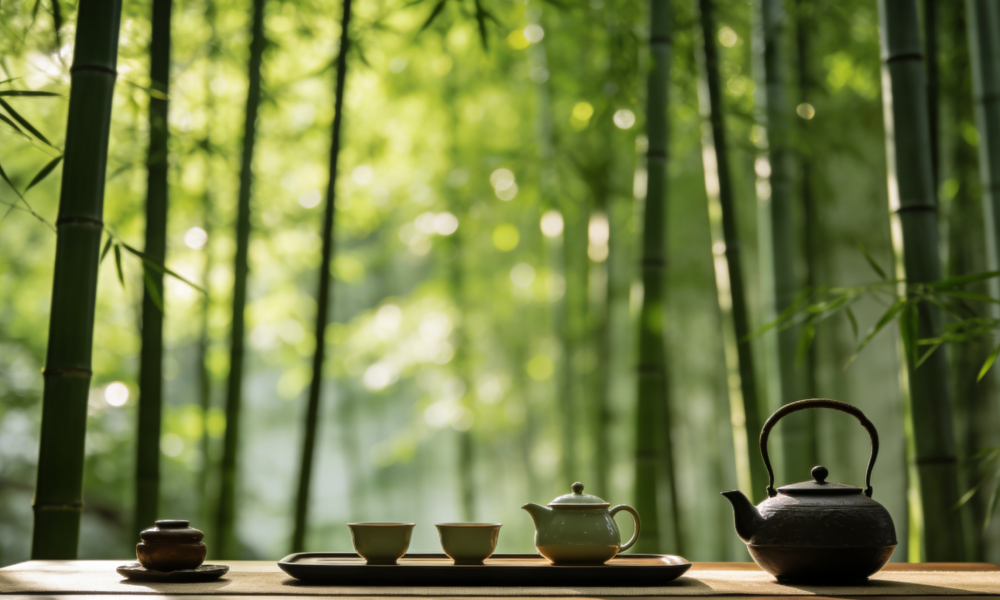
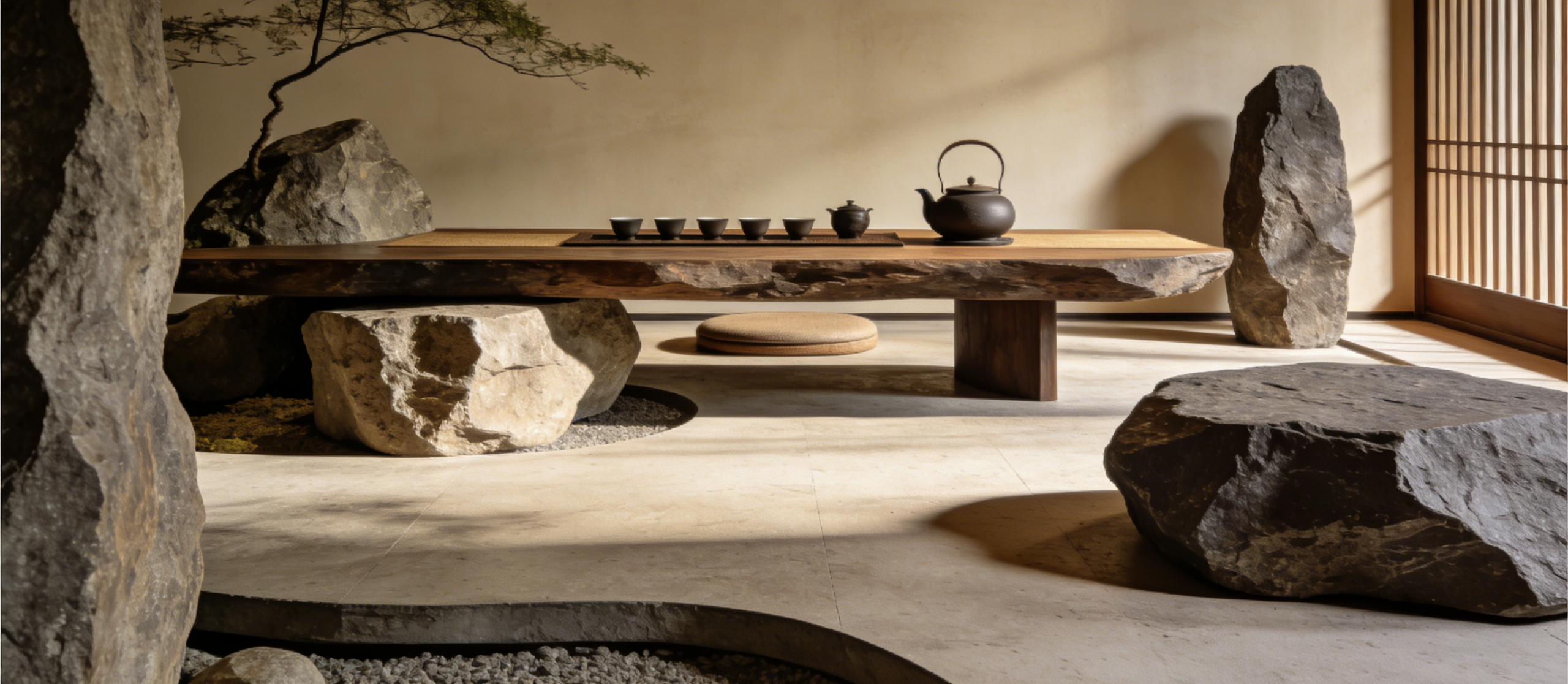
Minimalism in tea is not about emptiness for its own sake. It is about removing what distracts so that what matters can be seen clearly. A minimalist tea space is composed of few objects, each chosen with intention. The table is uncluttered, the lines are clean, the materials natural. Wood, stone, bamboo, clay—these elements form a quiet palette that invites the mind to rest.
In such a space, the eye is not pulled in many directions. Instead, it settles gently on the teapot, the cups, the tray. The absence of excess becomes a presence in itself—a presence of calm, of clarity, of breath. Minimalism teaches that beauty is not added; it is revealed. It emerges when we allow space to speak, when we trust that simplicity can hold depth, when we understand that the tea table is not a display but a moment of stillness made visible.
II. Zen Influence — Silence, Naturalness, and the Art of Being
Zen aesthetics shape the tea space in ways that are subtle yet profound. Zen teaches that the world is already complete, that nothing needs to be forced, that beauty arises naturally when we stop trying to control it. In a Zen‑inspired tea space, objects are placed not according to symmetry, but according to balance. The arrangement feels effortless, as though the tools have found their own resting places.
Silence is an essential element. Not the silence of emptiness, but the silence of presence—the silence that allows the sound of water to become music, the movement of steam to become poetry. Naturalness is another key. Imperfect textures, uneven glazes, the grain of wood, the roughness of stone—these elements remind us that life is not polished, but alive. Zen teaches us to see beauty in what is simple, humble, and unadorned. And in this seeing, the tea space becomes a place where the heart can breathe.
III. Emotional Atmosphere — How Space Shapes Mood, Rhythm, and Connection
A tea space is not only visual; it is emotional. The way objects are arranged, the way light falls, the way air moves—all of these shape the mood of the session. A minimalist, Zen‑inspired space creates a sense of spaciousness, allowing emotions to settle like leaves in still water. The rhythm of the session slows. Movements become deliberate. The mind becomes attentive.
In such a space, connection deepens. The brewer connects with the tools, with the tea, with the guest, with themselves. The tea space becomes a container for presence—a place where conversation becomes softer, where silence becomes comfortable, where the boundaries between inner and outer worlds dissolve. The emotional atmosphere is not created by objects, but by the space between them. It is the emptiness that holds everything together.
IV. Designing Your Tea Space — Intuition, Authenticity, and the Art of Belonging
Designing a tea space is not about following rules; it is about listening—listening to the room, to the materials, to your own inner rhythm. Some spaces call for wood; others call for stone. Some call for light; others for shadow. The key is authenticity. Choose objects that resonate with you, that feel alive in your hands, that bring you calm. Allow the space to evolve with time, with seasons, with your own changing heart.
A tea space should feel like a place where you belong—not because it is perfect, but because it is honest. It should reflect your temperament, your values, your way of moving through the world. When the space feels right, the tea feels right. The ritual becomes effortless, natural, alive. And in this alignment, the tea space becomes more than a physical environment—it becomes a home for the spirit.
Closing Reflections — The Tea Space as a Mirror of the Soul, and a Sanctuary for Being
When the session ends and the tools are returned to their places, the tea space remains—a quiet field of stillness, a landscape shaped by intention and presence. It reminds us that the art of tea is not only about flavor or technique; it is about creating a space where the heart can rest. Minimalism teaches us to remove what distracts. Zen teaches us to embrace what is. Together, they reveal a deeper truth: that the tea space is a mirror of the soul.
In its simplicity, we see our longing for clarity. In its silence, we hear our need for peace. In its naturalness, we recognize our own imperfect beauty.
A well‑designed tea space is not a luxury—it is a sanctuary. A place where we can return to ourselves, where we can breathe, where we can remember that life, like tea, is most beautiful when we meet it with presence, humility, and an open heart.
Curated Pieces, Crafted Purpose
Explore the selections below—where craftsmanship meets desire, and your tea table finds its fire.
「井栏花鸟 · Well Fence Harmony」 — 130ml Boutique Handmade Yixing Purple Clay Teapot | Well Fence Form with Flowers & Birds Engraving · Raw Ore Red Downhill Mud · Zisha Gongfu Gift Edition
「井栏龙韵 · Well Fence Harmony」 — 240ml Handmade Yixing Purple Clay Teapot | Well Fence Form · Raw Ore Red Leather Dragon Mud · Zisha Gongfu Tea Set
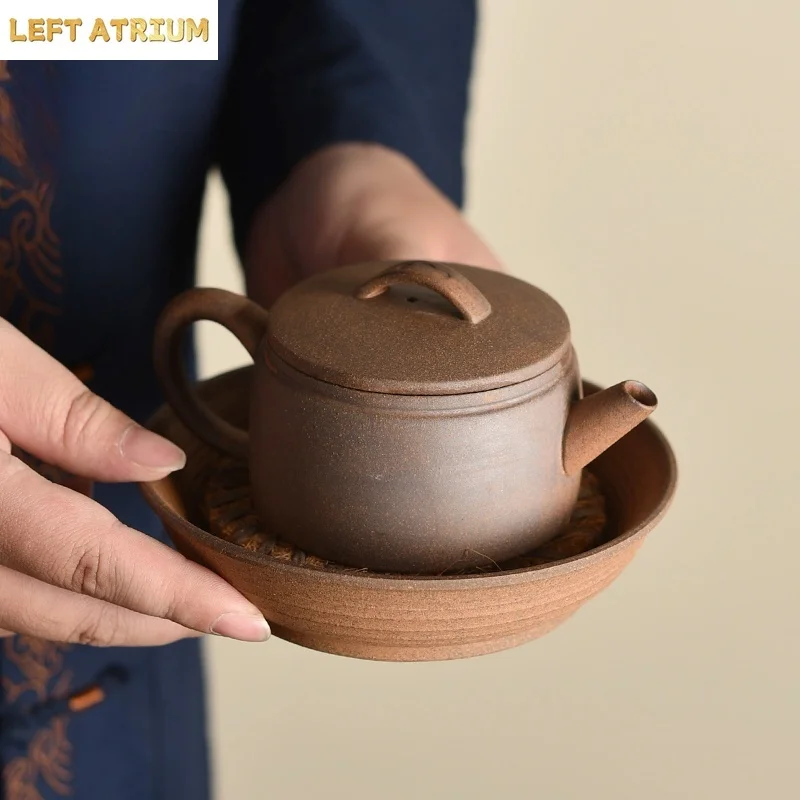
「侘寂壶 · Kurohō」 — 145ml Handmade Coarse Pottery Teapot (Retro Japanese Style · Rustic Clay Body · Gongfu Infuser Pot)
「供春壶 · Tribute to the Roots」 — 140ml Handmade Yixing Purple Clay Teapot (Gong Chun Style · Raw Ore Zisha · Mesh Filter · Folk Artisan Work)
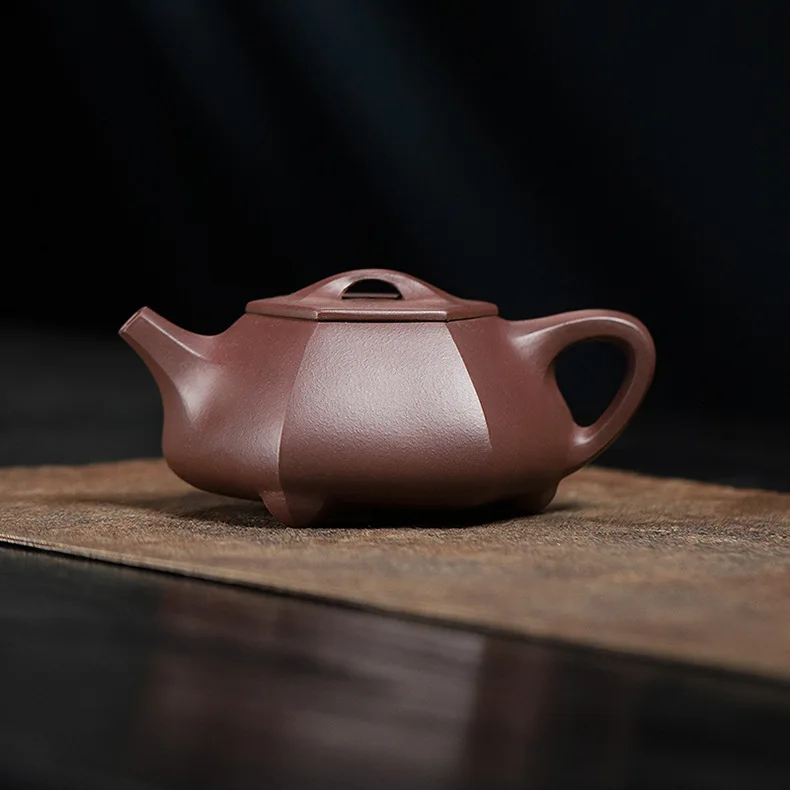
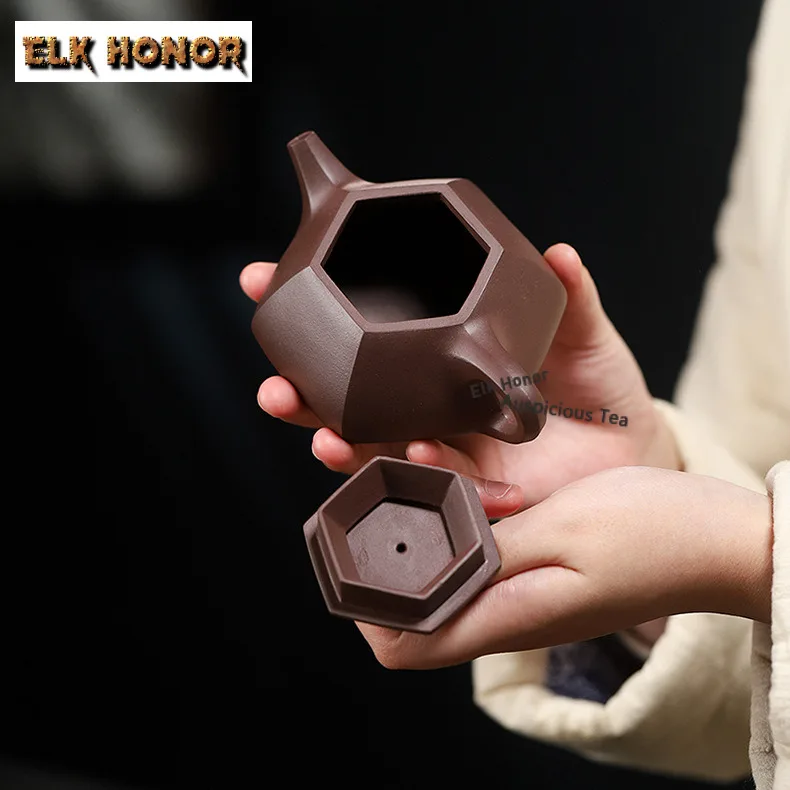
「六方石瓢 · HexaScoop」 — 200ml Handmade Yixing Purple Clay Teapot | Hexagonal Stone Scoop Form · Raw Ore Zisha · Vintage Gongfu Teaware Gift Edition
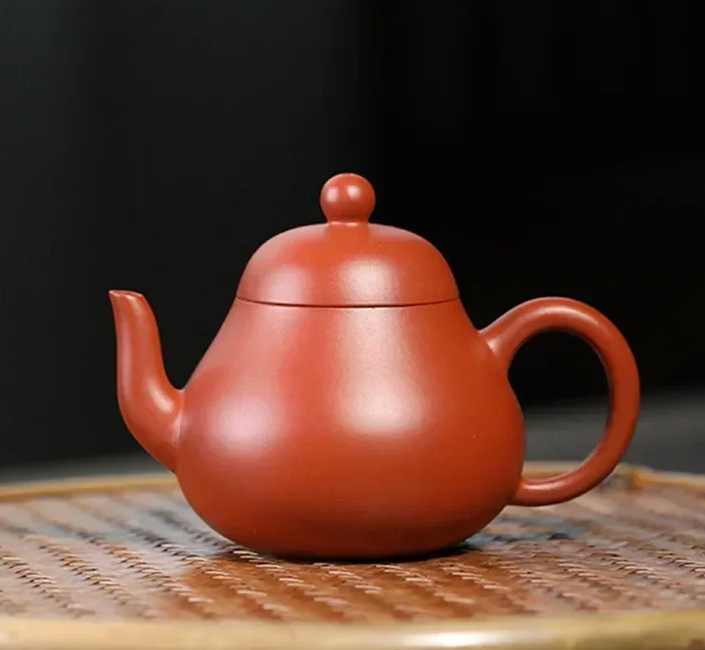
「创意梨壶 · Hearthdrop」 — 200ml Handmade Yixing Purple Clay Teapot (Raw Ore Zisha · Pear-Shaped Form · Famous Artist Work)
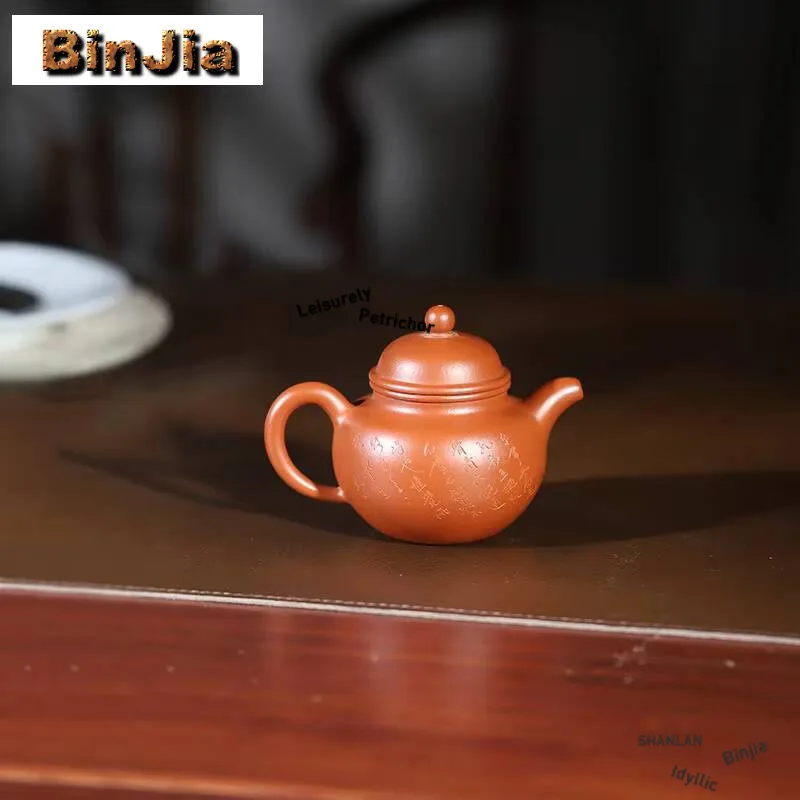
「刻韵壶 · Carved Harmony」 — 210ml Handmade Yixing Teapot (Raw Ore Zhu Ni Clay · Traditional Carved Form · Built-in Strainer)
「名家梨壶 · Masterseed」 — 85ml Handmade Yixing Purple Clay Teapot (Raw Ore Zisha · Pear-Shaped Form · Famous Artist Work)
「呼吸壶 · Breathing Vessel」 — 160ml Master-Crafted Yixing Teapot (Zhu Ni Clay · Dual-Pore Structure · Ming Dynasty Heritage)
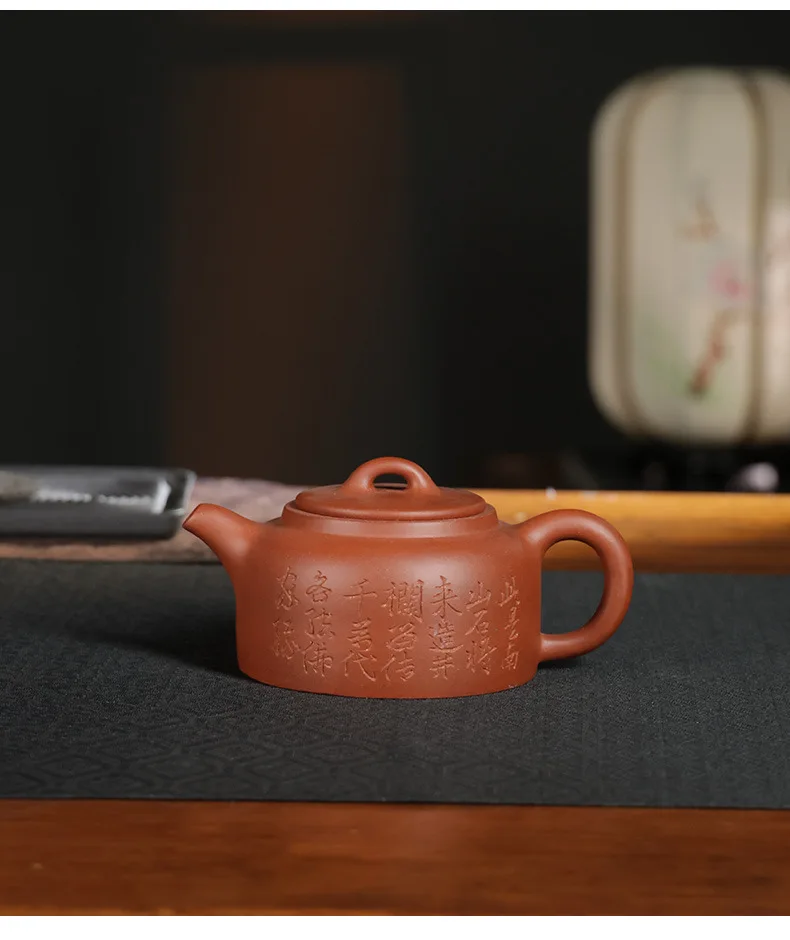
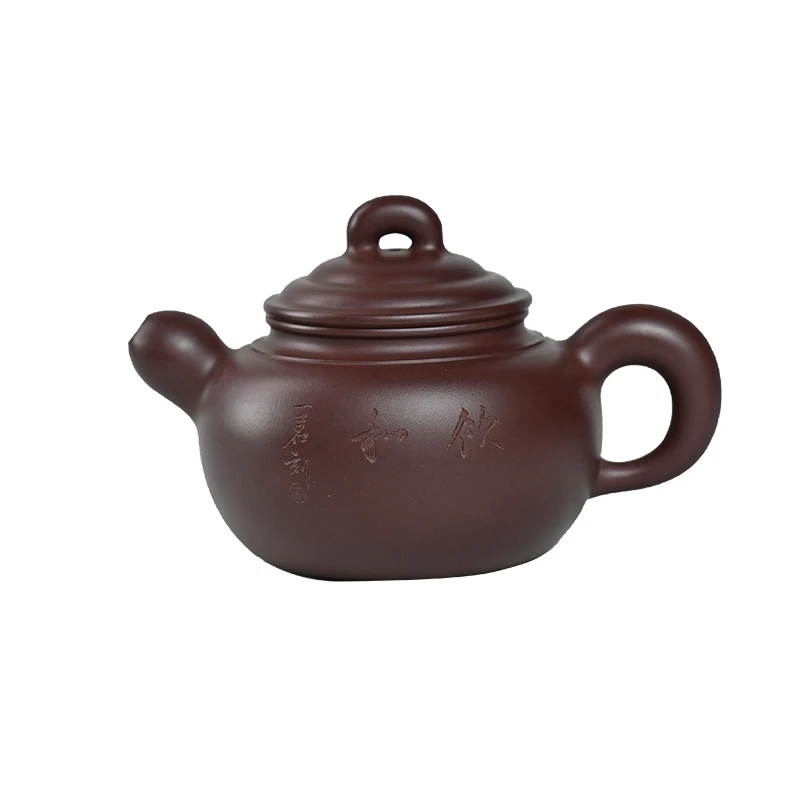
「和饮壶 · Harmony」 — 300ml Master Handmade Yixing Purple Clay Teapot (Raw Ore Zhu Ni · Classic Form · Calligraphy Engraving)
「大刻壶 · Grand Script」 — 540ml Handmade Yixing Purple Clay Teapot (Raw Ore Purple Mud · Large Capacity · Calligraphy Engraving)