
Tea Tools & Space

Tea Strainer: Precision & Purity
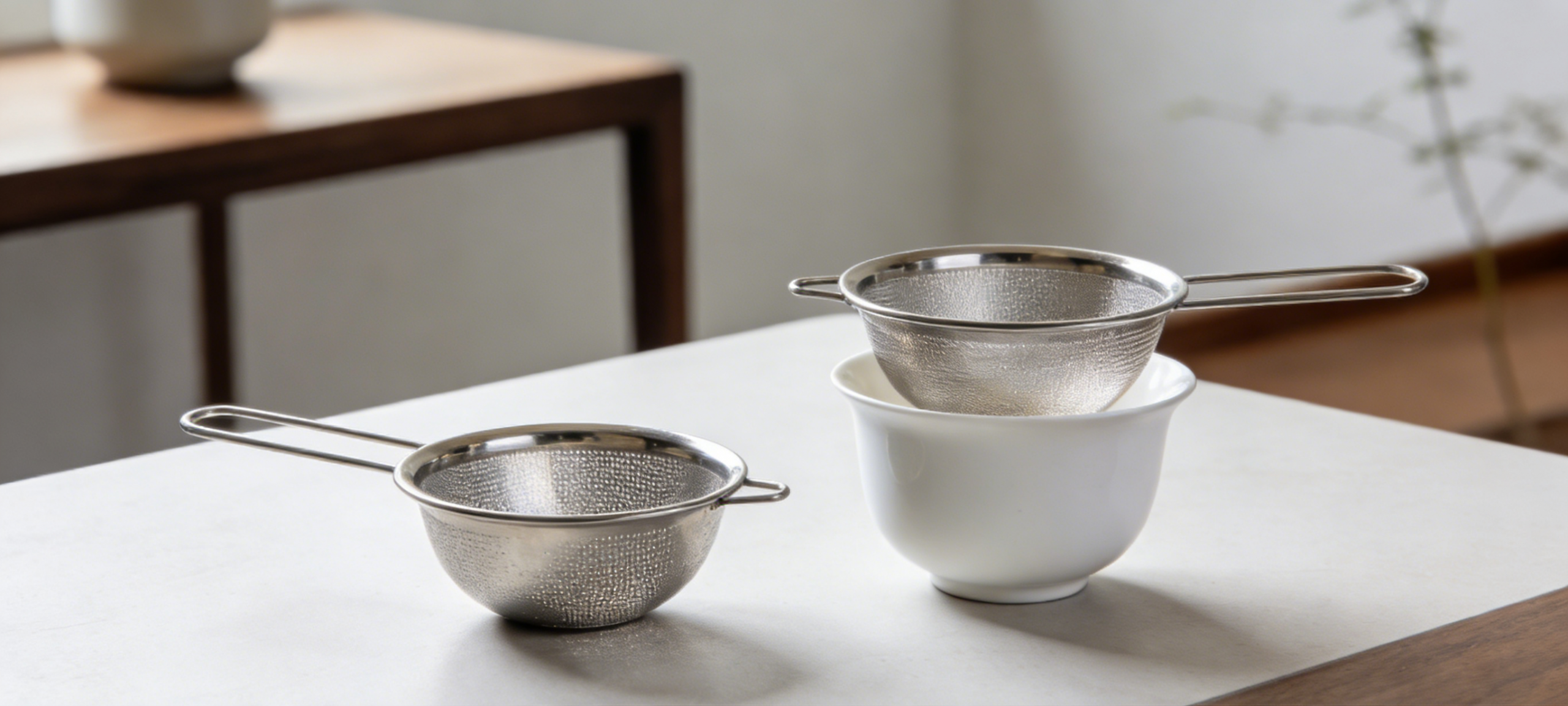
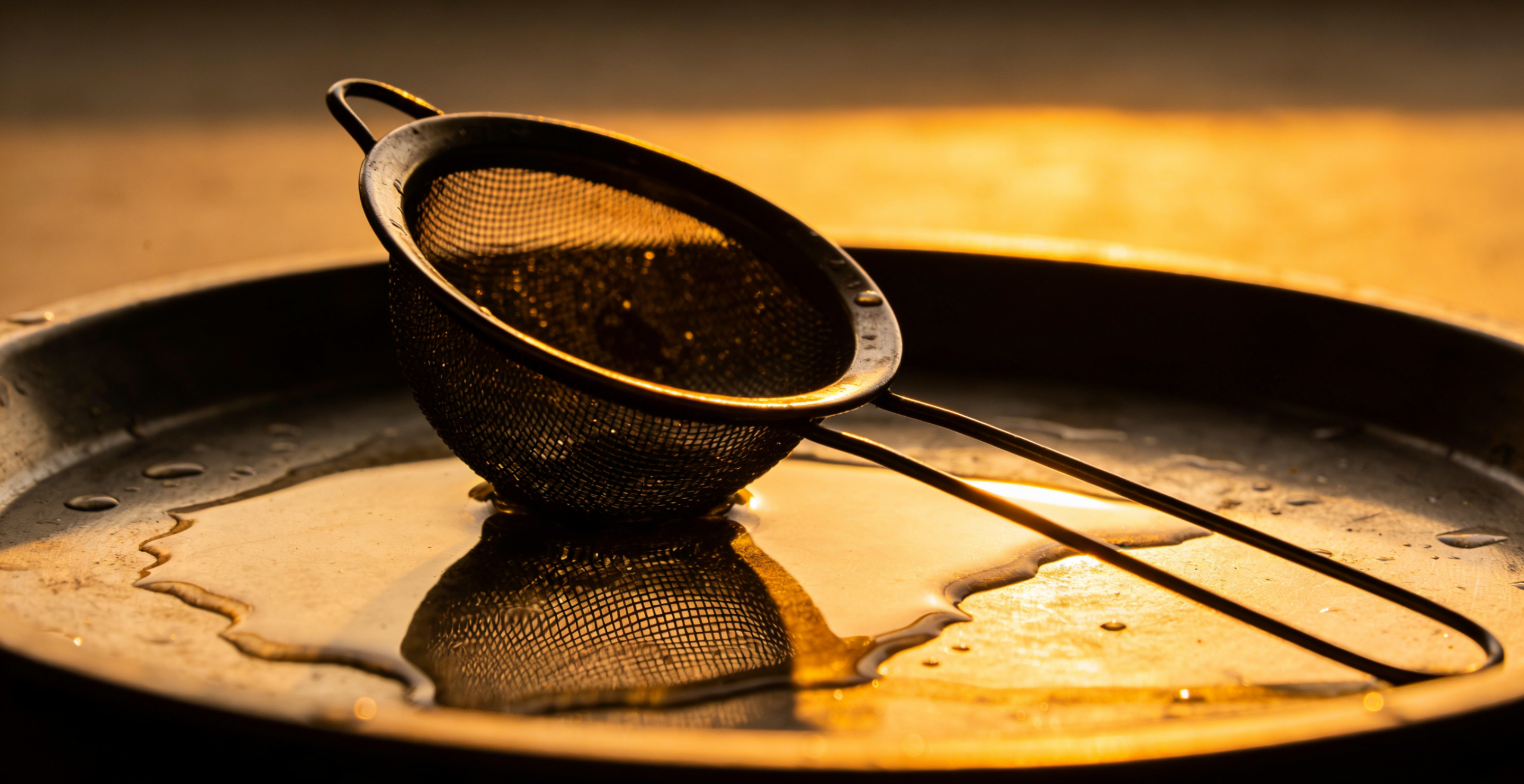
Tea Strainer

Precision & Purity — The Art of Clarity in Gongfu Tea

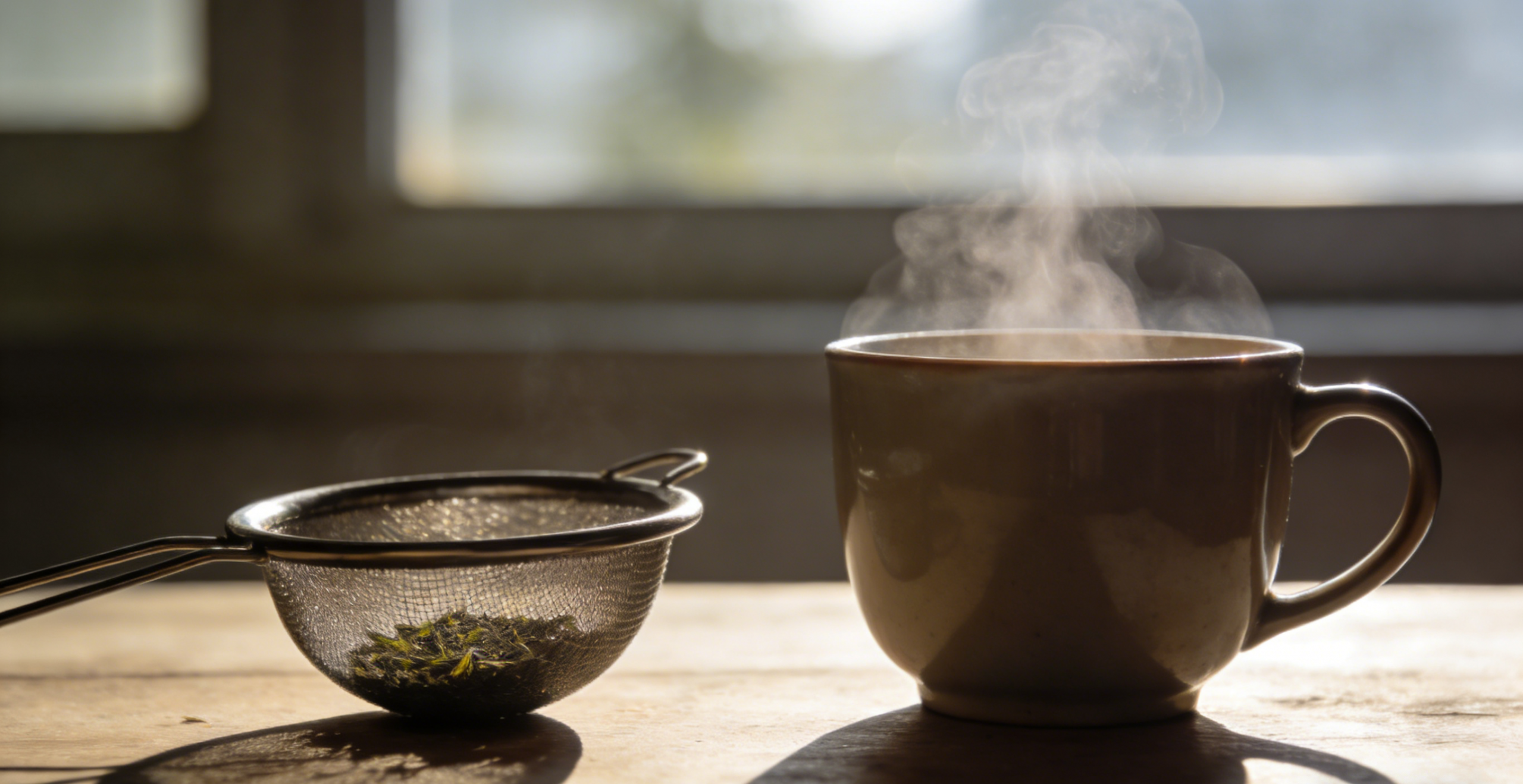
Before the first infusion touches the cup, before the aroma rises like a quiet promise, there is a moment when the brewer lifts a small, delicate object above the fairness pitcher—a tea strainer, often overlooked yet essential to the integrity of the ritual. It is a humble tool, a simple mesh or carved opening, but in its modest form lies a profound philosophy: that clarity is not accidental, but cultivated; that purity is not a given, but chosen; that the beauty of tea emerges not only from what is present, but from what is removed.

The tea strainer stands at the threshold between leaf and liquor, between chaos and refinement. It filters not only fragments of leaf, but also the noise of haste, the roughness of inattention. In its quiet way, it teaches that precision is a form of respect—respect for the leaf, for the vessel, for the drinker, and for the moment itself. To hold a tea strainer is to acknowledge that Gongfu tea is not merely about extraction; it is about intention, discipline, and the pursuit of purity in both taste and spirit. And in this pursuit, the tea strainer becomes more than a tool—it becomes a guardian of clarity.

I. Origins of the Tea Strainer — From Practical Necessity to Symbol of Refinement

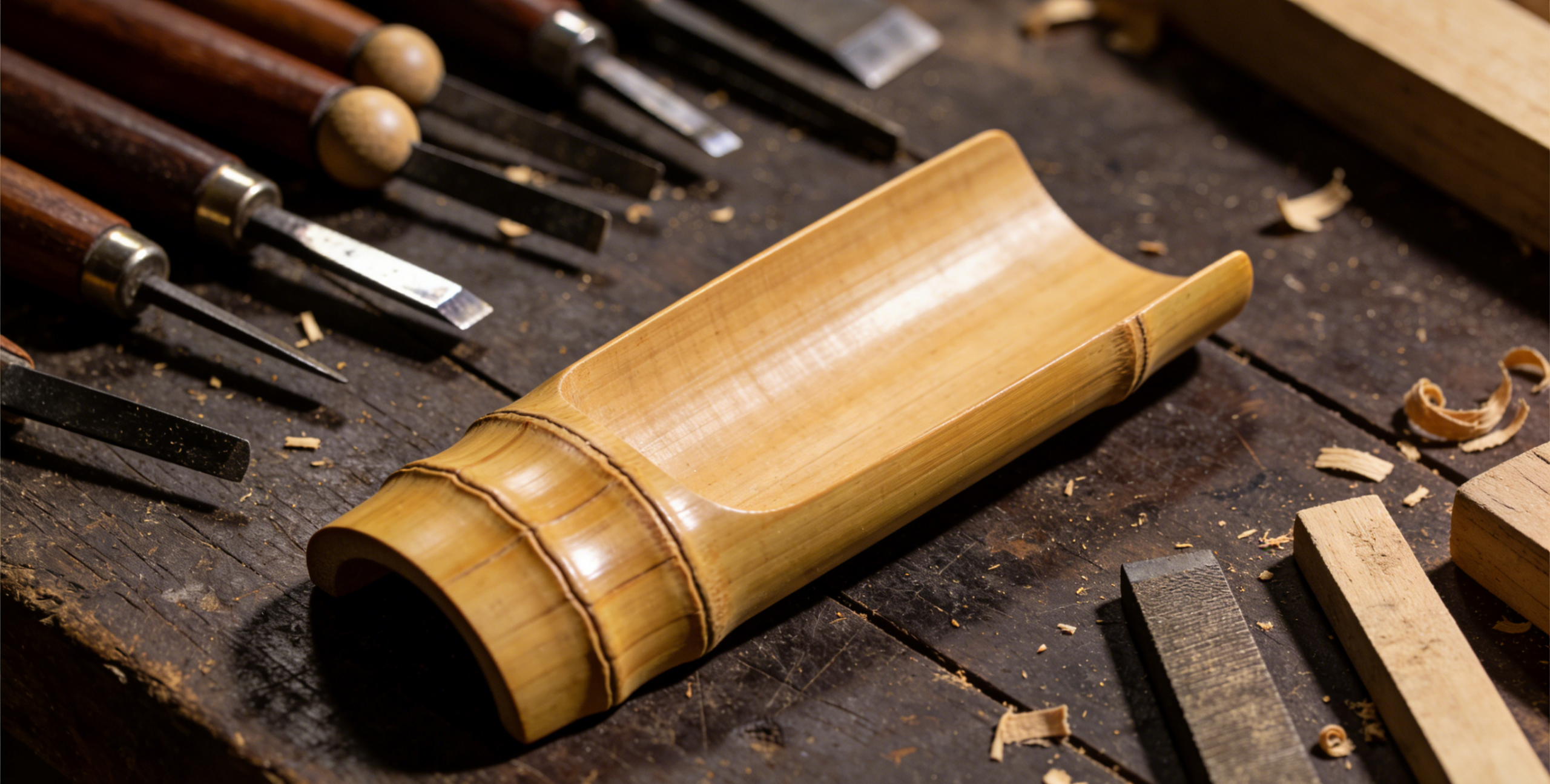
The tea strainer emerged naturally from the evolution of loose‑leaf tea. As brewing shifted from powdered tea to whole leaves during the Ming dynasty, the need to separate liquor from fragments became essential. Early strainers were simple bamboo sieves, carved by hand and used to ensure that the cup remained smooth and free of debris. Over time, as Gongfu tea developed in Fujian and Guangdong, the strainer evolved into a symbol of refinement—an object that signaled the brewer’s commitment to precision and purity.

In classical Chinese aesthetics, clarity has always been associated with virtue. A clear mind, a clear heart, a clear cup—these were not separate ideals, but interconnected expressions of the same inner discipline. The tea strainer, by ensuring that the liquor remained bright and unclouded, became a quiet embodiment of this philosophy. It was not merely a filter; it was a reminder that beauty emerges when we remove what obscures it.


II. The Strainer in Practice — Guiding Liquor with Grace and Control

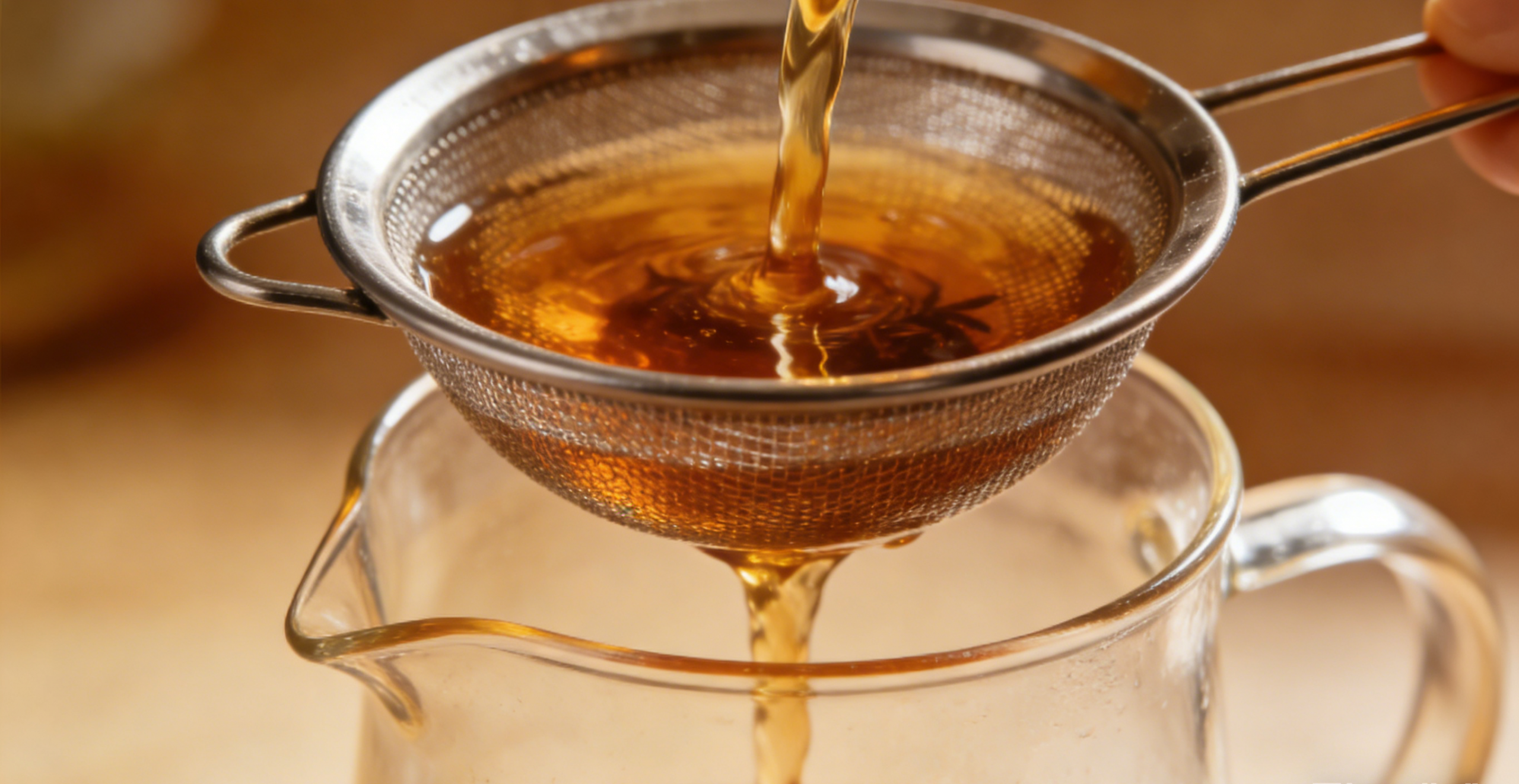
During a tea session, the strainer performs a role that is both practical and poetic. As the brewer pours from the teapot into the fairness pitcher, the strainer catches the small fragments that escape the pot—broken leaves, tiny stems, particles that would disrupt the smoothness of the cup. But the act of straining is more than filtration; it is a gesture of care. The brewer holds the strainer with steady hands, allowing the stream of tea to pass through with a soft, musical sound. The movement is controlled yet fluid, precise yet gentle.

This moment becomes a pause in the rhythm of the session—a breath, a transition, a quiet acknowledgment that clarity requires attention. The strainer teaches the brewer to pour with intention, to respect the flow of water, to honor the leaf by presenting its liquor in its purest form. It is a tool that elevates the entire experience, transforming the act of pouring into an expression of grace.

III. Symbolism and Spirit — Purity as an Inner and Outer Practice

The symbolism of the tea strainer extends far beyond its function. In Chinese culture, purity is not merely the absence of impurity—it is the presence of harmony. A clear cup of tea reflects a clear state of mind, and the strainer becomes a metaphor for the inner work required to achieve such clarity. Just as the strainer removes fragments from the liquor, the brewer is invited to remove distractions from the heart.

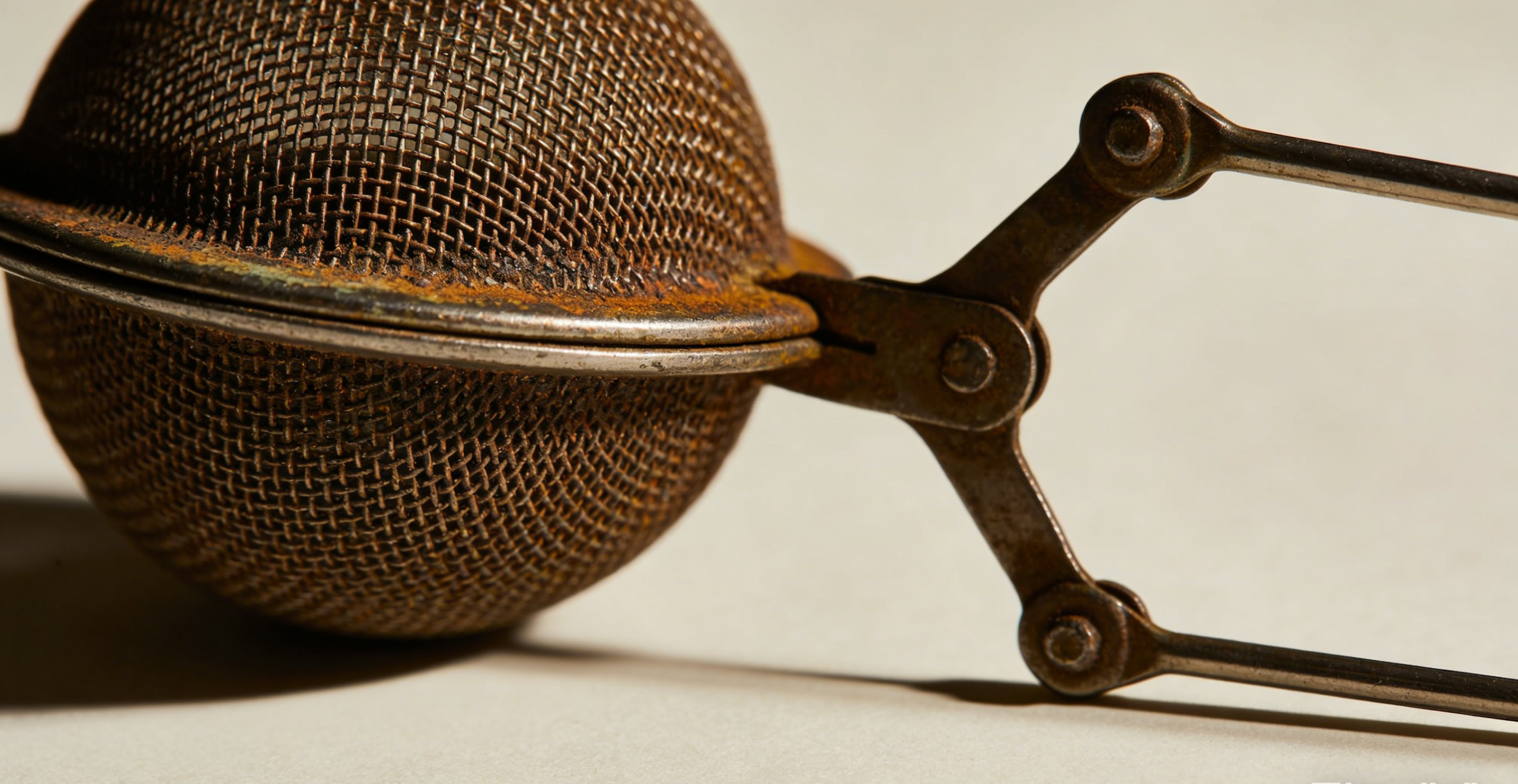
Over time, the strainer becomes a companion in this practice. Its mesh darkens with use, its frame absorbs the warmth of countless sessions, its presence becomes familiar and grounding. It reminds the brewer that clarity is not achieved through force, but through steady, attentive care. It teaches that purity is not perfection, but intention—the willingness to refine, to filter, to let go of what does not serve the moment.


IV. The Strainer in Modern Tea Culture — Minimalism, Aesthetics, and the Pursuit of Clean Flavor

In contemporary tea culture, the strainer has taken on new forms. Some are made of fine stainless steel, others of hand‑woven bamboo, others of porcelain carved with delicate patterns. Minimalist tea tables often feature strainers that are almost invisible, blending seamlessly into the ritual. Yet regardless of material or design, the purpose remains unchanged: to preserve the purity of the liquor and the integrity of the experience.

Modern tea drinkers value clarity more than ever. With the rise of high‑grade oolongs, single‑origin pu’er, and delicate green teas, the strainer has become essential to appreciating the full spectrum of flavor. It ensures that each sip is smooth, balanced, and free of distraction. But beyond taste, the strainer continues to serve as a symbol of mindfulness—a reminder that even in a fast world, we can choose to filter out noise and cultivate moments of quiet precision.

Closing Reflections — The Tea Strainer as a Guardian of Clarity, and a Teacher of Inner Purity

When the tea session ends and the strainer is rinsed and set aside, its presence lingers like the aftertaste of a well‑brewed cup—subtle, clean, and quietly profound. It stands as a reminder that clarity is not accidental; it is created through intention. The strainer teaches us that purity is not a passive state, but an active practice. It invites us to remove what clouds the moment, to refine what is coarse, to honor what is delicate.

In this way, the tea strainer becomes more than a tool. It becomes a teacher of the heart. It shows us that beauty emerges when we filter out distraction, that peace arises when we clear the path, that the art of tea is inseparable from the art of living. And as we return it to the tea tray, we are reminded that clarity—like tea—must be cultivated, cherished, and renewed with each session.

Crafted to Delight, Chosen to Feel Right

Curated Pieces, Crafted Purpose

Explore the selections below—where craftsmanship meets desire, and your tea table finds its fire.

-33%
Select options This product has multiple variants. The options may be chosen on the product page

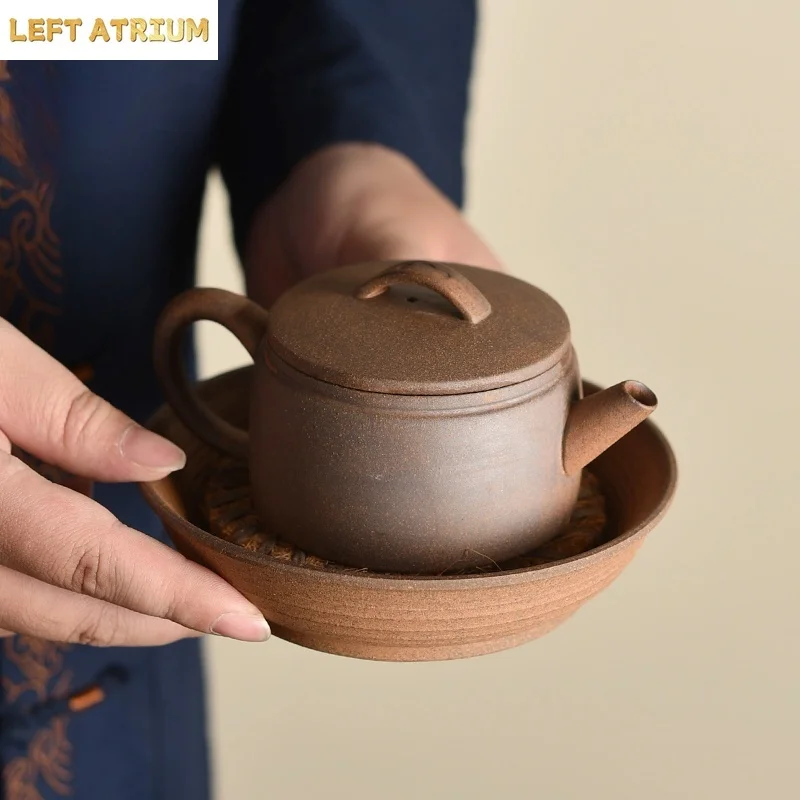
「侘寂壶 · Kurohō」 — 145ml Handmade Coarse Pottery Teapot (Retro Japanese Style · Rustic Clay Body · Gongfu Infuser Pot)

Original price was: $89.99.Current price is: $59.99.
-30%
Select options This product has multiple variants. The options may be chosen on the product page

「创意梨壶 · Hearthdrop」 — 200ml Handmade Yixing Purple Clay Teapot (Raw Ore Zisha · Pear-Shaped Form · Famous Artist Work)

Original price was: $99.99.Current price is: $69.99.
-25%
Select options This product has multiple variants. The options may be chosen on the product page

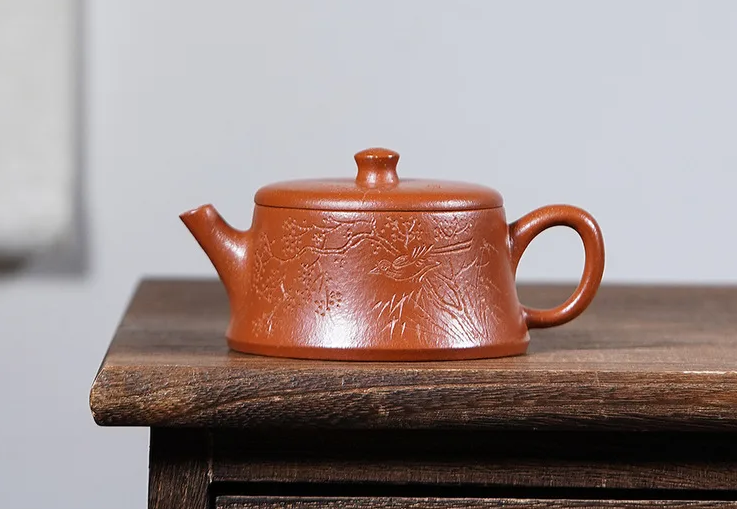
「刻韵壶 · Carved Harmony」 — 210ml Handmade Yixing Teapot (Raw Ore Zhu Ni Clay · Traditional Carved Form · Built-in Strainer)

Original price was: $119.99.Current price is: $89.99.
-30%
Select options This product has multiple variants. The options may be chosen on the product page

「名家梨壶 · Masterseed」 — 85ml Handmade Yixing Purple Clay Teapot (Raw Ore Zisha · Pear-Shaped Form · Famous Artist Work)

Original price was: $99.99.Current price is: $69.99.
-27%
Select options This product has multiple variants. The options may be chosen on the product page

「呼吸壶 · Breathing Vessel」 — 160ml Master-Crafted Yixing Teapot (Zhu Ni Clay · Dual-Pore Structure · Ming Dynasty Heritage)

Original price was: $109.99.Current price is: $79.99.
-11%
Select options This product has multiple variants. The options may be chosen on the product page

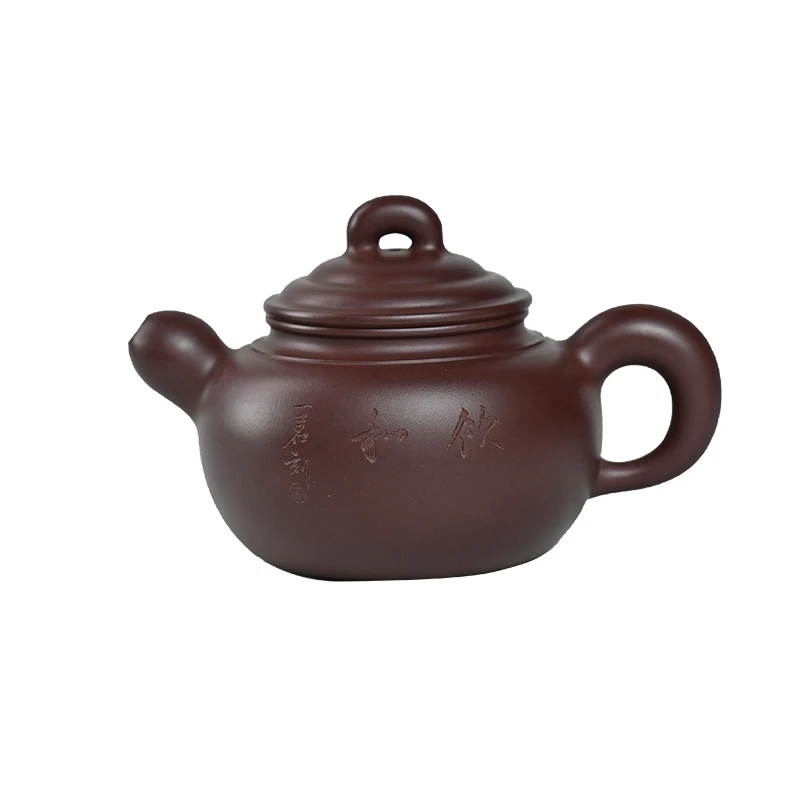
「和饮壶 · Harmony」 — 300ml Master Handmade Yixing Purple Clay Teapot (Raw Ore Zhu Ni · Classic Form · Calligraphy Engraving)

Original price was: $639.99.Current price is: $569.99.
-19%
Select options This product has multiple variants. The options may be chosen on the product page

「大刻壶 · Grand Script」 — 540ml Handmade Yixing Purple Clay Teapot (Raw Ore Purple Mud · Large Capacity · Calligraphy Engraving)

Original price was: $156.87.Current price is: $126.87.
-20%
Select options This product has multiple variants. The options may be chosen on the product page

「大口壶 · Inkroot」 — 180ml Handmade Yixing Purple Clay Teapot (Raw Ore Zisha · Large-Caliber Form · Built-in Filter)

Original price was: $149.99.Current price is: $119.99.

Leave a Reply

Your email address will not be published. Required fields are marked *